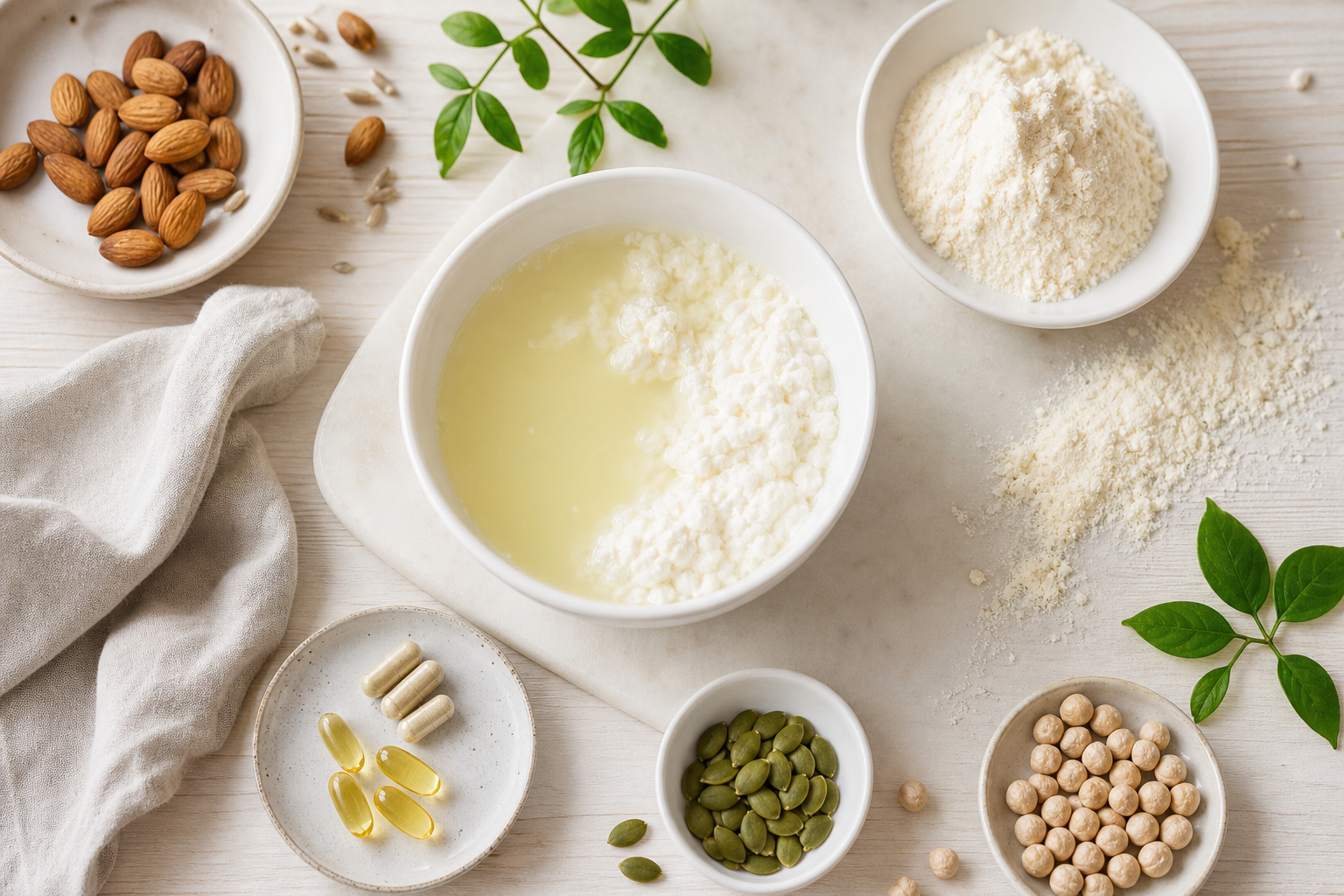
Casein or whey before bed: which should you actually choose?
For most people, the answer is that the total protein you eat across the day decides muscle outcomes far more than which powder sits in the bedtime shake – and when the two were finally compared head-to-head at a matched dose before sleep, they produced the same overnight muscle protein synthesis response. The digestion-rate difference between them is real; what it bought overnight, in the one trial that measured it directly, was nothing.
Casein and whey are the two protein fractions of milk. Whey is the liquid fraction, rich in leucine and rapidly digested. Casein is the curd fraction, which forms a gel in the stomach and empties more slowly. That digestion-rate difference is real, established dairy chemistry, and it is the entire basis of the "casein before bed" idea: a protein that trickles amino acids into the blood over hours rather than minutes should, in theory, support muscle-building processes across a night's fast.
Notice the word "in theory". A difference in how fast a protein digests is a mechanism. Whether that mechanism changes anything you can measure – overnight muscle protein synthesis, morning recovery, long-term lean mass – is a separate question, sitting at a higher and more demanding tier of evidence.
What criteria actually decide this, and in what order?
Ranked by how much they should move your decision:
- Total daily protein (decisive). Whether you reach roughly your daily target across all meals is the variable with the strongest link to muscle and recovery outcomes in the literature. A bedtime shake matters mostly as one more contribution to that total.
- Dose in that one serving (important). A given feeding needs enough leucine and total protein to meaningfully drive muscle protein synthesis. An underdosed shake of either protein does little; a well-dosed shake of either does the job.
- Digestion speed (conditional). This is the only axis on which casein and whey genuinely differ, and it matters only if you specifically want a slow overnight release rather than a fast pulse.
- Tolerance, cost and convenience (personal). Lactose sensitivity, taste, mixability and price. Real reasons to prefer one product, but reasons of comfort, not of proven physiological superiority.
The criterion most readers arrive with – "which protein is anabolically better" – is the one that matters least here, because the gap between the two is smaller than the gap between hitting and missing your daily total.
Do casein and whey even share an evidence base you can compare?
They are both complete dairy proteins with high leucine content, so they occupy the same broad category. But two things stop this from being a clean head-to-head.
First, digestion kinetics differ, so any comparison is between a fast protein and a slow one, not between two versions of the same thing. Second, and more importantly for anyone reading marketing claims: a study showing whey beats placebo and a separate study showing casein beats placebo do not combine into "casein beats whey" or the reverse. Two independent placebo comparisons displayed side by side are not a direct comparison. The question worth asking of any "best protein before bed" claim is whether that exact matchup – casein against whey, matched for dose, taken pre-sleep – was tested directly in humans, or assembled from separate results and a mechanistic story.
That matchup has now been run. In a 2023 randomised trial, thirty-six young men took 45 g of casein, 45 g of whey, or a non-caloric placebo half an hour before sleep after an evening bout of endurance exercise. Both proteins raised overnight mitochondrial and myofibrillar protein synthesis rates above placebo. Between casein and whey there was no difference on either measure. That is a single acute trial in one population, not the last word on months of training – but it is a direct, dose-matched comparison, and it points away from casein's mechanistic advantage showing up as an outcome.
How the two forms actually differ
Casein
A slow-digesting milk protein that gels in the stomach and releases amino acids gradually. What is genuinely established is the kinetics: casein sustains a lower, longer rise in blood amino acids than whey. What that buys you overnight in terms of muscle outcomes is the part that rests more on mechanism than on hard outcome data. It suits someone who wants the bedtime feeding to be their slow-release option and finds a thicker shake palatable. The slower release is the property people buy it for at night; in the one dose-matched overnight comparison, it did not produce a higher synthesis rate than whey.
Whey
A fast-digesting milk protein high in leucine, which produces a rapid, high spike in blood amino acids. Its rapid rise is well characterised, and it is the more studied fraction around training. Before bed, its faster clearance is the theoretical argument against it – the amino acid pulse comes and goes sooner. But "faster" is not "worse" if the serving is adequately dosed and your daily total is met; it is simply a different release profile. Whey often wins on mixability, taste and cost, and isolate forms are lower in lactose. One widely sold option in this category is this one – check it yourself against the criteria below rather than against overnight-specific claims; nothing here tells you that a given tub passes them.
Which differences change the outcome, and which just change comfort?
- Demonstrated and potentially outcome-relevant: the digestion-rate difference itself. It is real chemistry. Whether it translates into a meaningful overnight advantage for casein is the open part.
- Demonstrated but a matter of comfort or cost: whey's easier mixing and often lower price; casein's thicker, more satiating texture at night; isolate's lower lactose content for sensitive stomachs. These can legitimately decide your purchase without either protein being physiologically superior.
- Measured, and found not to differ: overnight muscle protein synthesis after a matched 45 g dose of either protein. Still untested: whether either one produces greater muscle or recovery gains than the other over months of training when daily protein is already adequate. That is where the marketing still outruns the evidence.
Who should choose which?
- Prefer casein if you actively want a slow overnight release, tolerate dairy well, and like a thicker pre-sleep shake – and especially if the bedtime feeding is otherwise the longest gap between protein doses in your day.
- Prefer whey if you want the cheapest, best-mixing, most flexible option, use the same tub around training, or need the lower-lactose isolate for tolerance. Its faster digestion is not a real drawback once the dose is adequate.
- It barely matters which if you are already hitting your daily protein target from balanced meals. At that point the bedtime protein type is a rounding error next to the total.
Whichever you buy, choose on evidence-relevant criteria: third-party batch testing for label accuracy and contaminants, a clear per-serving protein figure high enough to matter, a form your stomach tolerates, and a price you'll actually keep paying month after month. These are the properties that reliably affect what you get; the overnight-specific promises are the ones to discount.
Verdict
This comparison is settled with exceptions. For most people, total daily protein and an adequately dosed serving decide the outcome, and casein versus whey before bed is close enough that comfort, tolerance and cost should pick the winner. The exception is narrower than it used to be: the dose-matched overnight head-to-head has been run, and casein's slower release did not produce a higher overnight synthesis rate than whey. What nobody has tested is whether either protein wins over months of training. Until that exists, choose the protein you will drink consistently and reach your daily total. If that protein is whey, one widely sold category default is this one – with third-party batch testing as the thing to check on the label before you buy.
Sources
- Trommelen J, van Lieshout GAA, Pabla P, et al. Pre-sleep protein ingestion increases mitochondrial protein synthesis rates during overnight recovery from endurance exercise: a randomized controlled trial. Sports Med. 2023;53(7):1445–1455. PMID 36857005 – the dose-matched casein-versus-whey pre-sleep comparison; found no difference between the two.
- Res PT, Groen B, Pennings B, et al. Protein ingestion before sleep improves postexercise overnight recovery. Med Sci Sports Exerc. 2012;44(8):1560–1569. PMID 22330017 – 40 g of casein before sleep against placebo; the trial the "casein before bed" idea is usually traced to.