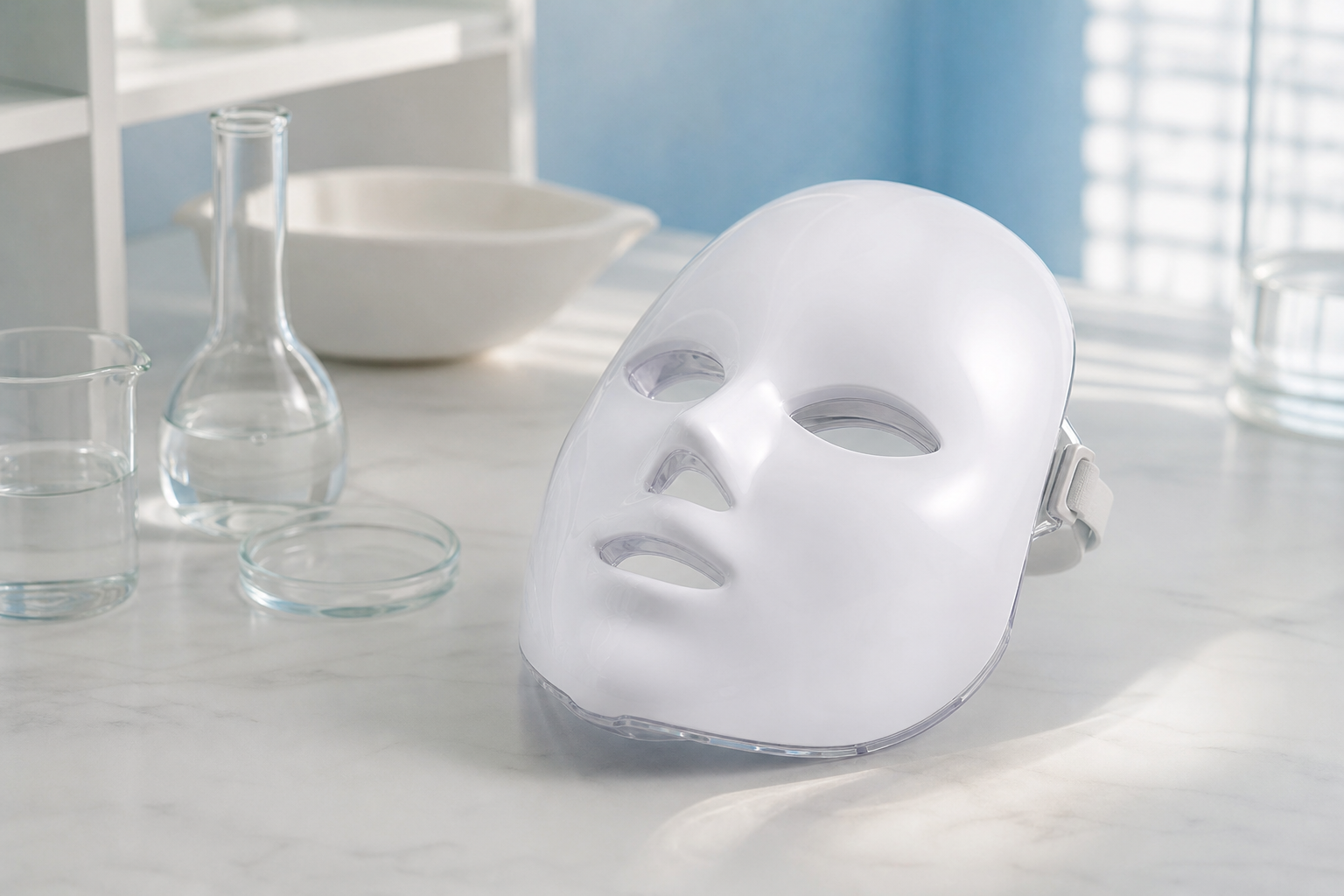
A red glow is not a device specification. To judge an LED face mask, you need the wavelength, light intensity at the skin, delivered dose, session length and treatment schedule. A study of one mask cannot validate another that happens to use the same colour.
Two trials, two ways to measure change
A randomised, double-blind trial enrolled 95 women aged 45–60. It compared two schedules — two or three sessions a week for four weeks — using a mask emitting light around 660 nm, against sham treatment. The groups did not differ significantly on the Wrinkle Assessment Scale. A computer-assisted analysis of photographs did find shorter wrinkles between the brows and around the right eye compared with sham, and participants rated their own facial appearance more favourably than the sham group. The two schedules produced similar results, so the extra weekly session added no measurable benefit. Both findings matter: reporting only the favourable image measurement would hide the null result on the clinical scale. Read the trial: PMID 40167796.
A second randomised sham-controlled trial involved 60 adults and a home-use device combining 630 nm LED light with 850 nm infrared light. Ratings of crow's-feet wrinkles differed from the sham group at 8, 12 and 16 weeks. The participants were adults of Asian descent aged 30–65 who met specific skin-type and baseline-wrinkle criteria. The result is promising for the tested protocol, but it does not establish a benefit for every face mask or every skin concern. Read the trial: PMID 39960921.
A practical checklist for a product page
Look for stated wavelengths in nanometres, irradiance at the treatment surface, dose per session and a clear schedule. Ask whether the cited human trial used the exact device on sale. If those details are missing, you cannot compare it responsibly with either study. A greater number of colours or LEDs is not, by itself, evidence of a better visible result. Nor is a more demanding schedule: in the one trial here that compared two of them, the more frequent schedule did no better.
These trials measured selected features of skin appearance; they did not test treatment for a skin disease. Follow the device's own instructions, including eye protection and contraindications. Seek individual medical advice if you have an eye condition, are sensitive to light, or take a photosensitising medication. We have not tested a retail mask ourselves, and we would check a specific model's specifications and local availability before recommending it.