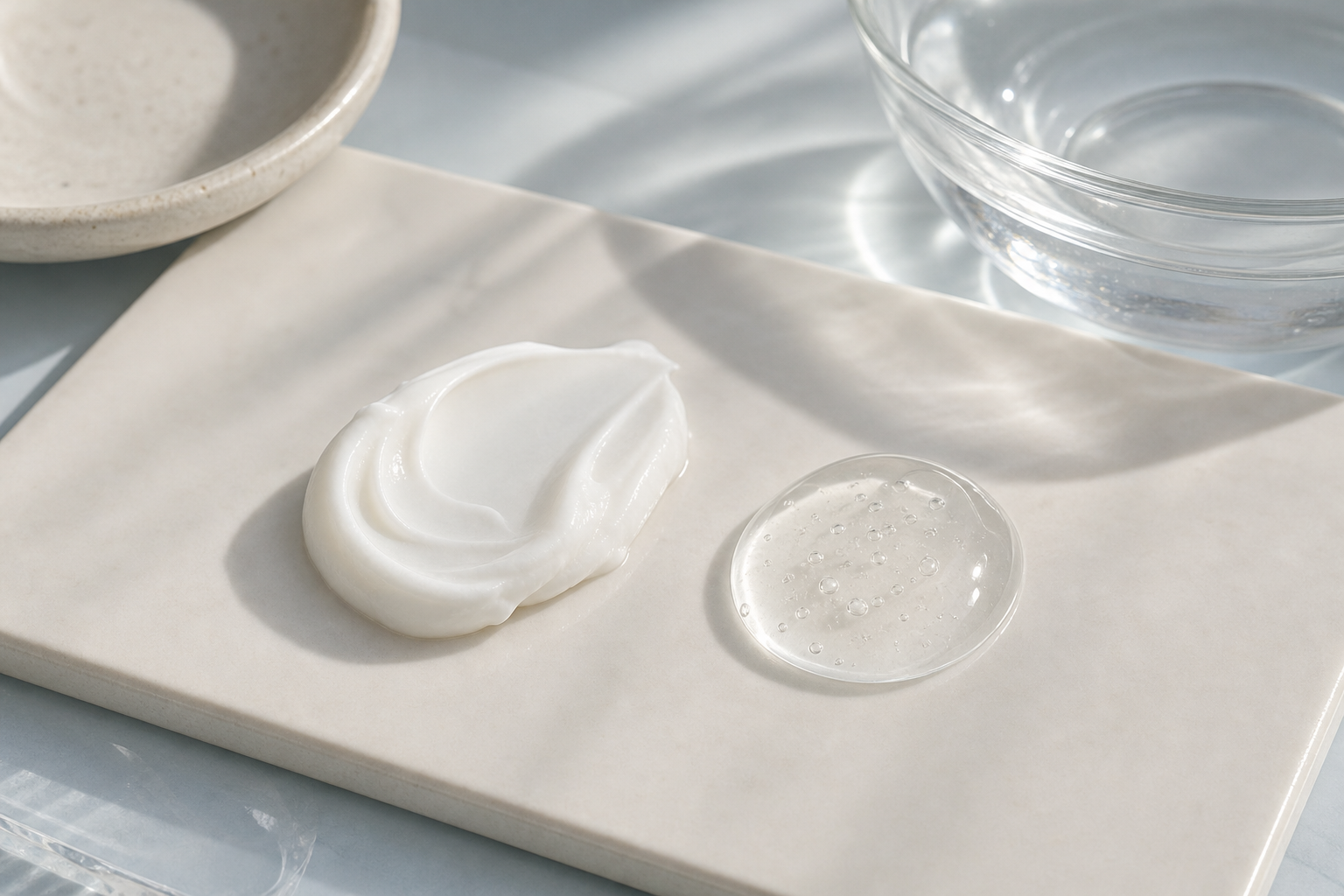
Glycerin is a water-binding ingredient in many moisturizers. Human studies give a good reason to expect improved hydration readings from particular glycerin creams. They do not make every jar containing Glycerin a proven skin-barrier treatment. Hydration and barrier function are different outcomes.
What did a 20% glycerin cream show?
In a double-blind comparison involving 17 healthy volunteers, researchers tested a cream with 20% glycerin against its matching vehicle without glycerin. After 10 days, corneometer readings increased, indicating greater hydration of the outer skin layer. The study did not show an effect on transepidermal water loss (TEWL) or on skin sensitivity to irritation by sodium lauryl sulfate. That is a positive hydration result and two outcomes without a demonstrated benefit. A small trial cannot prove that glycerin never affects barrier measures in any formulation. Lodén and Wessman, PMID 18498456.
Why does the rest of the cream matter?
A randomized, double-blind crossover study compared a complete emollient with its vehicle and versions containing either glycerol or petrolatum. Fifty-one healthy volunteers with dry skin had the products applied to their forearms; researchers measured TEWL and corneometry over the following 12 hours. The complete emollient reduced mean TEWL compared with the vehicle and the glycerol-only version. It also raised mean corneometry readings compared with the vehicle and the petrolatum-only version. The authors linked the hydration effect to glycerol and the reduction in water loss to petrolatum. The study assessed a specific formula over a short period and was not designed to test therapeutic benefit. Vaillant and colleagues, PMID 31532576.
What do hydration and TEWL measure?
A corneometer uses electrical properties of the outer skin layer as a proxy for its water content. TEWL measures water escaping through the skin. A better hydration reading does not by itself establish a lower TEWL. Equally, a lower TEWL shortly after applying an occlusive cream need not mean that the skin has been permanently rebuilt: a surface film can limit evaporation while it is present.
How should you assess a product claim?
Look for the glycerin concentration, the finished formula tested and the outcome reported. A claim about hydration needs a hydration measure; a claim about barrier function needs a separate relevant measure. Position on an ingredient list does not reveal an exact percentage. A pleasant, effective moisturizer need not have its own published trial, but a trial of a different formula is not proof for the bottle in your hand.
Verdict: these human studies support improved hydration from glycerin in tested creams. Barrier readings depend on the complete formulation. In the short crossover study, the full emollient lowered TEWL where the glycerol-only version did not match its result. People managing a diagnosed skin condition should seek individual clinical guidance rather than use a cosmetic ingredient list as treatment advice.